|
The Barron Report is Published
(Details from the Conclusions of the Barron Report are printed here in italics.) : Download the Barron Report: Download the Barron Report into the murder of Seamus Ludlow from the Oireachtas website (pdf file)
3 November 2005: It has been a long and hectic day for the Ludlow family, and a day filled with drama, disappointment, shambolic confusion, and finally relief that another phase of the Ludlow family's campaign for justice has been completed.
The Report covers a number of related matters, which can be summarised as follows:
By all accounts the 100-page Report is complete, there being no deletions or redactions. It has never been the Ludlow family policy to publicly name the chief suspects for the murder of Seamus Ludlow, even though their names have been known to the family for several years. They are named here now because Mr Justice Barron has seen fit to publish them in his Report.
Earlier in the day, the Ludlow family were not at all happy with the way they were being treated by the government and the oireachtas committee regarding the timing and the important detail of invitation or non-invitation to the event. As of Wednesday (2 November) evening the family were being led to believe that the Barron Report would not after all be published until Friday morning. Then, late Wednesday Jimmy Sharkey was informed by a journalist the the Report would indeed be published on Thursday. No formal notification was forthcoming from the government or from the oireachtas committee. This apparent snub angered the Ludlow family! In the absence of such an official invitation it was decided that the Ludlow family would not be going to Dublin. The Ludlow family would not allow themselves to face press queries about a Report they had not seen! Jimmy Sharkey and his uncle Kevin Ludlow spoke out against this governmental failure on local LMFM Radio, and his anger got through to the authorities in Dublin - they must have been asked to comment on their failure. Was it a breakdown of communications or was there something more sinister involved? These were the questions that came to mind. It was seen as yet further proof of the state's contempt for the Ludlow family and consistent with the contempt the Ludlow family have been facing for almost thirty years now. The government was clearly shaken by the press and family reaction to their mishandling of the Ludlow family's interests. Michael McDowell, Minister for Justice, addressed the issue with an announcement in Leinster House. He said that copies of the Report would be rushed up to Dundalk for the family before 3.00pm. He regretted that the family had not been kept informed.
It was then decided that Ludlow family members would go to Dublin.The family was represented by Kevin Ludlow (brother of the late Seamus Ludlow), and nephews Jimmy, Michael and Nicholas Sharkey, and Michael Donegan. These relatives of Seamus Ludlow were really looking forward to getting the Barron Report. Imagine their dismay when, while still travelling to Dublin, they received a phone-call from solicitor James MacGuill, informing them that there may be no publication of the Report that day after all, it could be postponed until Friday. This made the relatives of Seamus Ludlow really angry, not knowing what games were being played in Dublin. They were determined to go on to Dublin and raise pure hell until they got the Barron Report, or at least a satisfactory explanation for the latest setback. On arriving in Dublin they found that the media people waiting at the hotel, were just as puzzled and angry as they were. Also present was Margaret Urwin, Secretary of Justice For the Forgotten, representing victims and bereaved of the Dublin and Monaghan bombings of 1974. It was nearly two hours later before confirmation came through that the oireachtas committee would be publishing the Barron Report at 5.00pm. The Ludlow family and their solicitor would receive copies of the Report at 4.00pm so that they could read through it before it was published under parliamentary privilege. "The family are understandably angry at the fact that the information concerning suspects received by Gardai in 1979 was not made known to them until the Sunday Tribune published the articles on the matter in 1998. However, it is clear that none of the local officers (with the exception of Supt Courtney, D/Sgt Corrigan and the senior officers to whom they reported) were aware of this information, at the time or subsequently. The failure of the investigating officers to inform the family is rooted in the far more serious failure to follow up the information by having the suspects questioned." From the Barron Report (Conclusions - page 86)
Though it names the four suspects, the Barron Report has not been able to clearly establish who killed Seamus Ludlow, but Justice Barron did say that the Dundalk forestry worker's death was a random sectarian killing of an innocent Catholic by loyalist extremists. Mr Justice Barron says the murder of Seamus Ludlow was never properly investigated. "From the evidence available to it, the Inquiry believes that the only credible explanation for the failure to pursue these suspects is that a direction was given which led the investigating officer, D/Supt Dan Murphy to abandon plans to have the suspects interviewed outside the jurisdiction. "As to why such a direction mifght have been issued, only one credible explanation has been offered - that it was done in order to avoid a siuation where gardai might feel obliged to reciprocate by allowing RUC officers to attend interviews of suspects in the State." From the Barron Report (Conclusions: page 83)
Justice Barron's report (at page 14) reveals that "according to the investigation report, there was a Garda checkpoint in operation near the Newry Bridge during the relevant time. Registration numbers of cars noted during this time were followed up (mostly with the RUC) but nothing emerged to connect any of them with the murder." It seems extraordinary that the killers' car passed through this Garda checkpoint, situated in the vicinity of the Lisdoo Arms bar, both going into Dundalk and heading back out towards the border. They must have stopped to lift Seamus Ludlow within sight of the gardai on duty! This distinctive northern registered two-door Datsun sports type car, carrying four male occupants, aged in their twenties and thirties, should have aroused Garda suspicion. These were dangerous times along the border with south Armagh, and it was only six months since the murderous loyalist car bombing of Dundalk in which two local men lost their lives. It would seem clear that this car should have prompted some inquiry in the hours after the body of Seamus Ludlow was discovered. The Barron Report does not answer several questions still asked by the Ludlow family. Was the loyalist killers' car stopped by the Garda outside the Lisdoo Arms? Did the Garda take note of the car and its registration number? Did the Garda talk to the driver and any of his passengers? Were any inquiries made about the car with the RUC in the aftermath of the murder? If such inquiries were made the RUC would have had cause to ask why the driver, a 38-year-old serving UDR soldier from Killyleagh, north County Down, was in Dundalk on the night of Seamus Ludlow's murder. If the RUC failed to pass on such information to the Garda then clearly that force has serious questions to answer. It could mean that the RUC must have known from the beginning that loyalist UDR soldiers were involved in the murder of Seamus Ludlow. Justice Barron does not report any evidence that this car was noted by the Garda or investigated in the aftermath of the murder! If the Garda had noted the killers' car passing through the checkpoint this would have given cause for the suspects to have been investigated many years before 1998. Mr Justice Barron reports that files are missing from Gardai Headquarters and the Department of Justice. In one instance he offers incomplete information about one file that could indicate that the Garda and the RUC had advance information about this murder raid into Dundalk! Justice Barron reports (on page 7): "Some garda documents are either missing or were never brought into existence. Foe example, there are no Security and Intelligence (C3) files on three of the suspects about whom information was received from the RUC in 1979. There was a file on the fourth suspect that had been opened in 1976 as a result of unrelated information received from the RUC, but unfortunately it is missing." Disturbingly, Justice Barron only expanded upon this missing file on 16 February 2006 in answer to a specific question at a hearing of the Oireachtas Justice Sub-Committee. He referred to an RUC letter, dated 27 April 1976, received by the Garda, just a few days before the murder of Seamus Ludlow. In their completed Final Report (March 2006) the Oireachtas Sub-Committee comment: "During the hearings it emerged that a letter was communicated to the Gardai naming one of the four suspects as a person in whom the police should take an interest. The letter pre-dated the murder of Seamus Ludlow. On behalf of the family, Mr McGuill said that they had not adverted to the existence of this document since it was only obliquely referred to elswhere. He pointed out that it was not addressed in Mr Justice Barron's report." The letter from the RUC did not expressly suggest that any of the seven loyalist suspects named, including the one who is now believed to be a suspect for Seamus Ludlow's murder, was engaged in cross-border activity or posed any danger to people south of the Irish border, but given that the RUC saw fit to identify them as dangerous individuals at that partcular time, it can be suggested that there may have been prior knowledge of the raid into Dundalk. There is nothing to suggest that the Garda did anything to verify the movements of the persons named by the RUC so as to eliminate them from their inquiries. There is nothing to suggest that gardai manning checkpoints in and around Dundalk were given information about any of the individuals, such as photographs and descriptions, or asked to look out for them. Did the Garda ask the RUC to investigate the movements of any of these individuals in the immediate aftermath of the discovery of the body of Seamus Ludlow? Could anything have been done that could have prevented the death of Seamus Ludlow? Unfortunately, the Barron Report, which does not refer to the RUC letter in any detail, completely fails to offer answers to these important questions. Given the importance of this letter from the RUC, and the serious implications it has for this case, it seems rather strange that Mr Justice Barron did not give sufficient details of it in his written report. Given, also, that the letter and any other corespondence related to it are lost it is difficult to get an accurate view of exactly what the Garda knew in 1976 about at least one of the loyalist suspects in the murder of Seamus Ludlow. Perhaps this is the very reason for why this and other important files and documents are lost! Mr Justice Barron points the finger of blame for the failure to prosecute at Laurence Wren, a former Assistant Garda Commissioner. The Barron Report says the decision was probably made by Deputy Commissioner Laurence Wren, but that he was likely to have discussed it with senior gardaí and with the Department of Justice. At the time of Seamus Ludlow's killing in 1976 and until 1979, Deputy Commissioner Wren was in charge of the C3 Security & Intelligence section of the gardaí. In a letter sent three weeks before publication, Mr Wren warned Mr Justice Barron that he had no intention of accepting the conclusions about his role that appear in the published Report. He wrote: "If the report is eventually published as it now stands, I will be compelled to take corrective action to clear my name." In an interview broadcast on RTÉ Radio, Mr Wren said he had never heard of the four suspects in the case being named before he went before Mr Justice Henry Barron for his report. According to the Barron Report, Mr Wren was likely not to have pursued the men because the RUC might demand reciprocal rights in the Republic. But speaking on 4 November 2005, Mr Wren said that it was a well-established policy that in political cases police did not cross the border in either direction. In the Barron report, the former Garda Commissioner, Pat Byrne, acknowledged that garda management was 'somewhat remiss' in doing its job. He said the failure to pursue the four men lay with all senior management. However, Mr Wren said the matter had not been his direct concern and therefore he did not consider himself to have had a part in this failure. It appears that Mr Wren is expected to carry the can for what was undoubtedly a collective decision which may well have been authorised by others above him in the gardaí and the Department of Justice. These faceless others hope to avoid being exposed for their role in this scandalous injustice against the late Seamus Ludlow and his family.
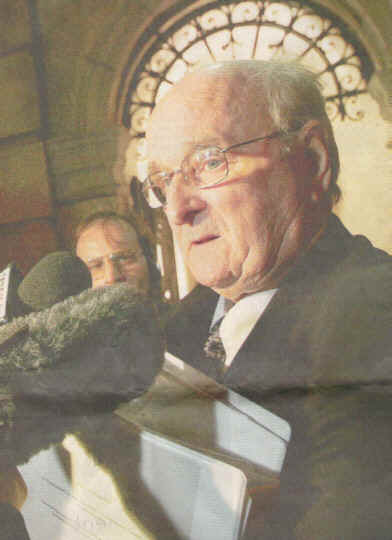
"In the end, the fact that the inquest proceeded reflects a belief that, as the cause of death was undisputed; the inquest procedure was a formality. While this was technically true, the decision to proceed in the absence of family members caused them unnecessary hurt and annoyance, at a time of extraordinary sadness and difficulty in their lives." From the Barron Report (Conclusions - page 86) Mr Justice Barron did not find evidence of collusion, but that is hardly surprising since the British authorities in the North gave him practically no cooperation, and many files in Dublin are missing, incomplete or were never mmaintained. He was not allowed to find the evidence of collusion. All the more reason in the Ludlow family's view, for a public inquiry. Sometime after the Barron Report's publication, and many press, TV and Radio interviews the Ludlow family group went to the RTE studios where Jimmy Sharkey and James MacGuill, (Ludlow family solicitor) and Paul O'Connor (of the Pat Finucane Centre, Derry) were interviewed on air on the Prime Time programme. In all of these interviews - outside Leinster House, at Buswell's Hotel, or at RTE - the Ludlow family maintained that the Barron Report cries out for a fully independent public inquiry as the only way to get to all the facts of the case and to finally secure justice for the late Seamus Ludlow TDs involved in the next year's sub-committee investigation, which began in open hearing with oral evidence from the Ludlow family on 24 January 2006, warned that senior Garda officers of that time and today would face "very tough questions". Fianna Fáil TD Sean Ardagh, chairman of the committee and the newly established sub-committee, refused to comment on the Barron Report's content or pre-empt the findings of the sub-committee. Mr Ardagh said: "Committee members only received this report at 11.30am today and have not had a chance to consider it fully." Mr Justice Barron said his job was made more difficult as documents were lost, destroyed or misplaced and key witnesses were ill, dead or unable to remember important events. Garda Commissioner Noel Conroy accepted that there "were issues" in the original investigation. "In recent years, An Garda Síochána has taken whatever actions were available to right the situation and in this regard co-operated fully with the Barron and other inquiries and will continue to do so," he said. See the Ludlow family's press release of 5 November 2005 in response to the publication of the Barron Report. On 5 November 2005, in a Belfast Telegraph exclusive report, Michael McHugh, spoke to Paul Hosking, one of the four loyalist suspects named by Mr Justice Henry Barron in his private inquiry report that was published under parliamentary privilege by an oireachtas committee on Thursday. Mr Hosking admits to being present when Seamus Ludlow was murdered, but he maintains his innocence of the crime. In an extraordinary statement Mr Hosking: said he was tired of having the finger pointed at him and added that he may make a submission to the Irish Justice Committee, which will consider the report in January. "This has been going on for years and I am fed up with it," he said. "I feel like I am the victim, it is awful for my family and they have gone through hell." While the Ludlow family is sorry to hear that Mr Hosking's family has suffered, he should be reminded that the victims here are the murdered Seamus Ludlow, the innocent man he and his companions left lying in a County Louth lane, and his family who have lived through thirty years of loss and pain, aggravated by lies and smears which helped keep him and his three Red Hand Commando/UDR companions free from justice. To read the article go here >>> Writing in the Irish Independent, on the same day, columnist Maurice Hayes, commenting on the publication of the Barron Report, concludes with the suggestion: Maybe the time has come to draw a line under the past to agree to a closure of the books and to move on from there. While kind advice is always welcome, Mr Hayes should know that the Ludlow family takes advice from their legal representative and their friends, and not from columnists in the Irish Independent who know nothing of the loss this family has suffered. I Top I Download the Barron Report from the Oireachtas website (pdf file) or: Read these excerpts from the published Barron Report: DECISION OF DIRECTOR OF PUBLIC PROSECUTIONS (NORTHERN IRELAND) COMPLAINTS OF LUDLOW-SHARKEY FAMILY ALLEGATIONS OF IRA INVOLVEMENT IN LUDLOW MURDER I Top I Mr Justice Henry Barron (1926-2010), a member of Ireland's tiny Jewish community, sat on the Supreme Court from 1997 until his retirement in 2000. He passed away on 25 February 2010, aged 83. See his obituary on Times online.
Download the Barron Report from the Oireachtas website (pdf file) Find below links to excerpts of the transcript of 24 January 2006, the first day of hearings before the Oireachtas Sub-Committee on Justice:
I Top I See also, the following press coverage of the publication of the private Barron Report: Statement released by Justice for the Forgotten UTV news online, 3 November 2005: 'Barron report to be published' See also, the following press coverage of yesterday's publication of the private Barron Report: The Irish Independent, 4 November 2005: Ludlow family insists public inquiry is crucial to getting justice for their father BBC News online: 4 November 2005: Call for public inquiry into 1976 murder RTE News online, 4 November 2005: Wren rejects Barron report finding The Irish Times, 4 November 2005: Ludlow report criticises Garda investigation The Belfast Telegraph, 4 November 2005 Relatives of man killed by loyalists urge police action probe The Irish Examiner - Editorial, 4 November 2005: Family needs a full-scale inquiry The Irish News, 5 November 2005: Ludlow family call for public inquiry into death I Top I SUPPORT THE SEAMUS LUDLOW APPEAL FUND Bank of Ireland 78 Clanbrassil Street Dundalk County Louth IrelandAccount No. 70037984 Thank You.
The
Ludlow family supports the campaign by the Rooney and Watters families of
Dundalk for an inquiry into the murderous Dundalk Bombing of 19 December
1975 which resulted in the sectarian murder of Jack Rooney and Hugh
Watters. Further information can be accessed at their campaign
website.
Visitors are welcome to leave messages on our new Bravenet guestmap Guest Book. You can indicate your country or state of origin by using the map supplied.
|
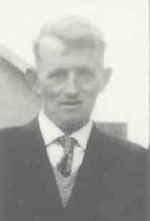
 The
published 100-page Barron Report names all of the loyalist suspects and
Judge Barron is highly critical of the Gardai for their failure to go
after the suspects after 1979.
The
published 100-page Barron Report names all of the loyalist suspects and
Judge Barron is highly critical of the Gardai for their failure to go
after the suspects after 1979.